

Advent and the Science of Waiting: How Slow Hope Heals and Rewires the Mind and Spirit
Exploring the intersection of slow hope, neuroscience, and the healing rhythms of Advent

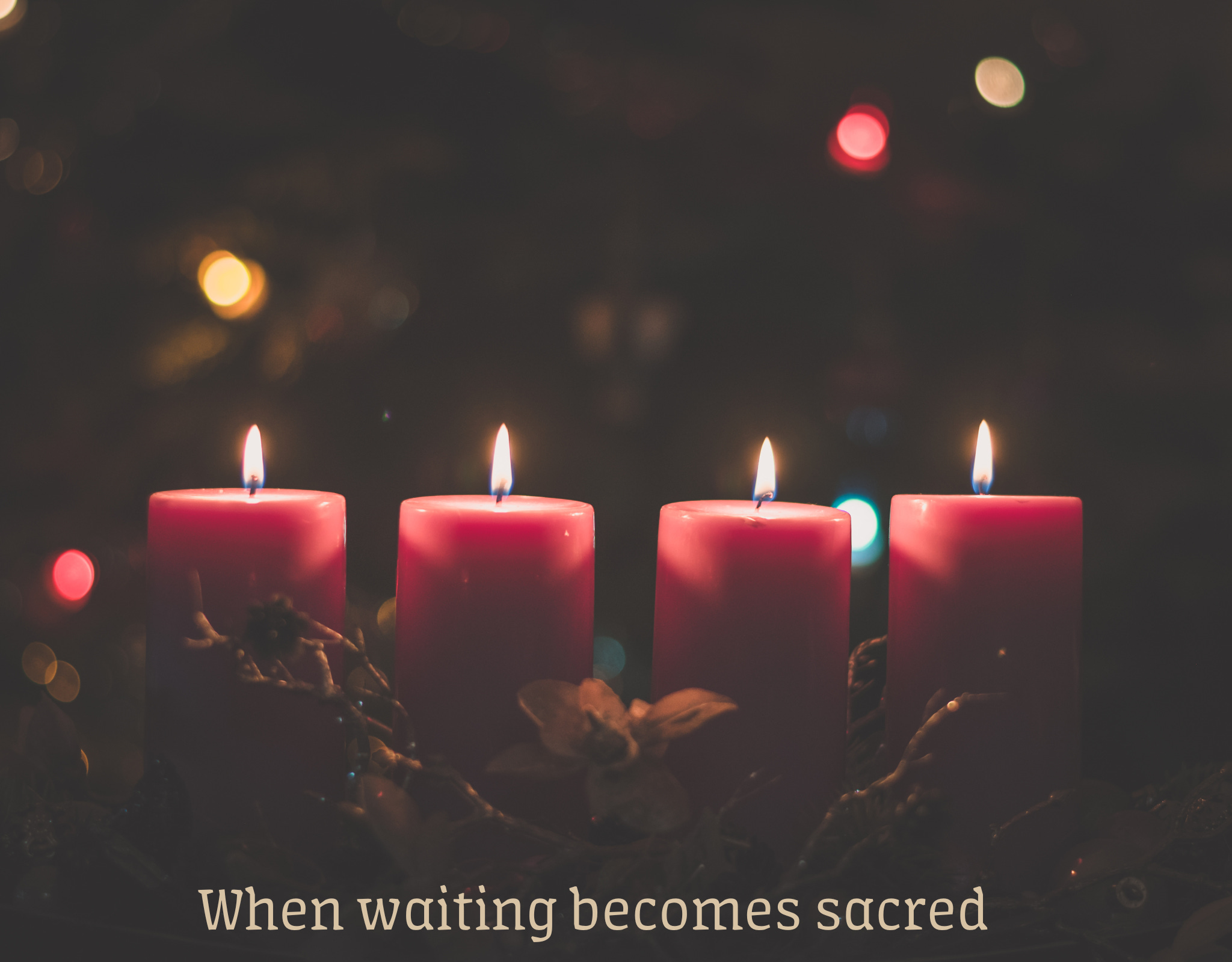
Today is the first day of Advent 2025. Advent invites us into a different kind of time. It is a time that moves more slowly. Think about the pace of breath, the slowness of a flickering candlelight, and the slow stretch when your heart is longing.
It is a slow, sacred season in which we practice waiting as a spiritual discipline, reshaping us from within rather than passively.
Neuroscience shows us that the way we wait changes our brains. All my previous articles have shown evidence of that. Spirituality shows us that the way we wait opens our hearts, and the intersection between the two lies in how we practice spirituality at a slower pace, which helps our brains reshape. Advent, then, holds both truths in a single flame. It is the renewing of our minds and the softening of our souls.
Before we light the first candle, we pause, breathe, and exhale.

May this season of waiting be gentle
May your breath grow spacious and your heart unhurried.
May you sense the nearness of God in the quiet spaces
where hope flickers, not necessarily in the grand revelations
May the Spirit breathe comfort into the weary parts of you,
always reminding you that you are held, guided, and never alone.
May this season be a time of opening your heart and soul to the miracle
already unfolding inside your waiting.
May it be so.

Our brains already understand the reason and posture of Advent, as it is a season shaped around longing and anticipation. Our brains know this intimately. Neuroscience shows that anticipation activates the brain’s reward system as it releases dopamine in small, steady pulses. This isn’t the same dopamine rush of instant gratification. It’s a more gentle, sustained release that comes from patient expectation.
In other words, Advent aligns us with the most healing neural rhythms we have, which is the slow build of hope.
Research of contemplative practices reveals something else. When we wait with intention, the prefrontal cortex is activated. This is the area that holds vision, compassion, emotional regulation, and perspective. When we intentionally slow down, breathe deeply, and reorient ourselves toward possibility, we strengthen the neural pathways associated with resilience.
Advent is an invitation for the same spiritual reorientation. We are asked to turn our gaze toward God’s promise, not in a way that we deny the world’s pain, but in defiance of despair. Big difference, right? We are invited to make space for hope that grows quietly, like a seed beneath the soil.
St. Ignatius termed this “holy noticing,”[1] which is an awareness of how God is already present. In Buddhism, it is an invitation to mindful presence, dwelling fully in the now while holding the not yet with tenderness. In contemplative Christianity, it is the spacious pause where the soul exhales and whispers, “Come, Lord Jesus.”
Mindfulness in the Christian vision is to let that same mind be in [us] that was in Christ Jesus.
— Stefan Gillow Reynolds
The candles lit each week during Advent represent hope, peace, joy, and love. They each mirror the slow illumination of neural pathways that awaken through repeated practice. Just as every candle brings light to the room, each moment of intentional waiting brightens the inner landscape of the mind.
So, what if the miracle of Advent is not only that Christ comes into the world, but that we become more open, more grounded, and more attentive to the Presence that has been with us all along?
It’s not just about waiting. Advent invites us to slow down, not withdraw. It is more about an awakening than suppression. It is to feel and breathe again. We prepare for the holy arrival that transforms everything in our minds, nervous systems, and souls.

Where do you feel longing in your body right now, and what might that sensation, whether it be a tightness, warmth, emptiness, or anticipation, be trying to show you?
What small flicker of hope has been asking for your attention, and have you been too busy to notice it?
In what ways is God (or the Sacred within) gently preparing room within you during this season of waiting?

Breath of Anticipation: Take three slow, deep breaths each morning. On the inhale, silently say, I open to hope. On the exhale, I release what I cannot carry. Let this simple pattern calm your amygdala, which will then soften your stress responses and align your heart with presence.
INHALE: I open to hope
EXHALE: I release what I cannot carryLight a Candle of Intention: Each candle of Advent symbolizes a neural shift of hope, peace, joy, and love. As you light your candle, name the quality you desire. Let the flame act as a visual cue, signaling your nervous system to move from vigilance to openness.
Practice Holy Noticing: Set a timer for 2 minutes. Notice one thing that feels like grace — something that brings warmth, grounding, or steadiness. Doing this strengthens your neural pathways for gratitude and allows the spiritual practice of presence to settle into your body.
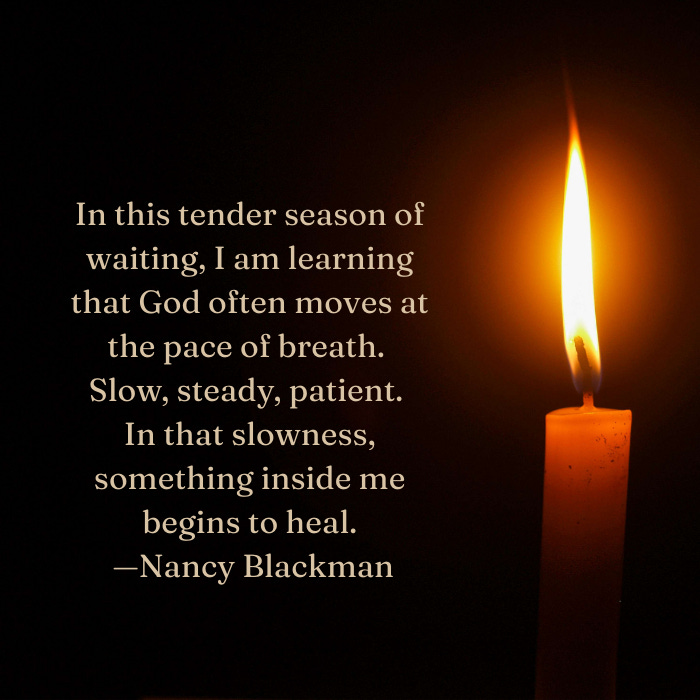
In essence, Advent is more than a countdown; it’s a neural and spiritual pilgrimage. It invites us to wait in a way that heals the brain, steadies the heart, and expands the soul. Through mindful breath, gentle anticipation, and quiet noticing, we begin to feel the slow dawning of hope from within.
The sacred arrival we await is mirrored by a quiet transformation unfolding inside us. In this season, we remember that waiting is not empty. Waiting grows us.

May hope rise softly within you,
like light finding its way through the dawn.
May your mind rest in the peace that surpasses understanding,
and your heart open to the Love always arriving.
May each breath steady your spirit,
each candle guide you home,
and may the Holy One meet you tenderly
in every moment of your waiting.
May it be so.
Pace e bene — peace and good.
May you know that you are loved because you matter.
May your soul be refreshed.
sdg
[1] Charles Stone, Holy Noticing: The Bible, Your Brain, and the Mindful Space Between Moments (Chicago, IL: Moody Publishers, 2019), 17.